
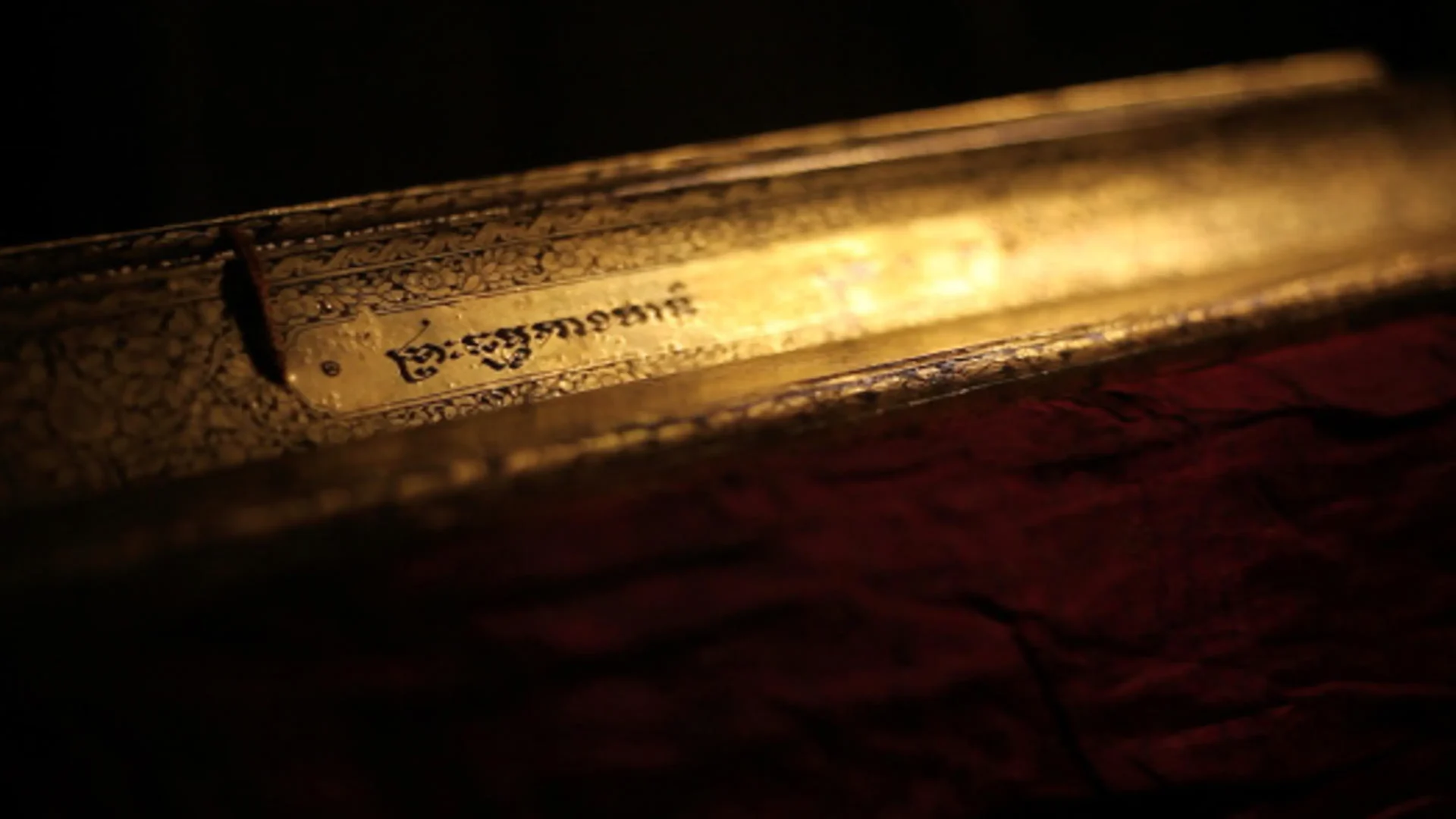
We are delighted to announce the official release of our latest comprehensive publication: “หลักฐานธรรมกาย: Dhammakaya Exhibition.” This trilingual e-book (compiled in Thai, English, and Chinese) marks a monumental milestone, celebrating over two decades of dedicated academic research, international collaborations, and scriptural discoveries by the Dhammachai International Research Institute (DIRI).
Preserving the Dhamma: A 22-Year Journey
Since its inception, inspired by the profound vision of Luang Por Dhammajayo to trace the original teachings of the Buddha, DIRI has traversed the globe to locate, digitize, and analyze ancient Buddhist manuscripts. This e-book serves as an extensive visual and academic archive of that journey, mapping out our research collaborations with leading universities and institutions across the globe—from New Zealand and Australia to Europe and Asia.
What’s Inside the E-Book?
The publication systematically catalogs historic artifacts and texts that prove the deep-rooted, cross-traditional origins of the “Dhammakaya” and traditional meditation practices:
Ancient Inscriptions & Manuscripts: Explore high-resolution imagery and textual breakdowns of the Phra Dhammakāyādi (Thepprachum version), the Mula Kammatthana, and unique palm-leaf manuscripts discovered in historic sites like Wat Pa Sak Noi.
Global Epigraphical Evidence: Study the details of the Noen Sra Bua stone inscriptions and ancient silver foils that bridge Theravada and early Mahayana histories.
The Silk Road Legacy: Dive into the textual analysis of early Mahayana scriptures such as the Foshuo guan jing (Visualization Sutra), the Vajracchedikā Prajñāpāramitā (Diamond Sutra), and the Suvarṇaprabhāsa (Golden Light Sutra), showcasing a unified meditative heritage spanning Gandhari, Sanskrit, Pali, and Chinese traditions.
The Practice of Buddhanussati: Read concluding insights on early Buddhist meditation methods, showing how visual mindfulness (Buddhanussati) transitions into profound, formless mental clarity.